
Why Proper Yard Drainage Matters
In North Texas, water rarely arrives gently. Heavy downpours, fast-moving storms, and compacted soils can quickly turn a healthy yard into a source of standing water, erosion, or foundation risk. For many homeowners, drainage issues don’t show up as dramatic flooding. They appear as soggy lawns, water pooling near the foundation, or mulch washing away after every storm.
Improving residential yard drainage isn’t about moving water randomly. It’s about controlling where water goes and how quickly it leaves your property. A thoughtful combination of French drains, downspout drains, and surface collection systems like channel or basin drains, often paired with a well-designed rainscape, can protect your home, landscaping, and long-term property value.
Understanding North Texas Soils: Why Drainage Solutions Vary
One of the most important factors in drainage design is soil type. Denton county is home to two main soil types, and the results can vary dramatically.
Sandy Loam Areas
Sandy loam soils drain relatively well. Water moves through them more easily, which reduces surface pooling but can allow moisture to travel deeper and closer to foundations if not directed properly.
Implications for homeowners:
Water may disappear quickly at the surface but still threaten foundations
Erosion and soil migration can occur during heavy rain
Drainage systems must focus on controlled conveyance, not just absorption
Black Clay Areas
Black clay soils, common throughout much of the north and east areas of DFW, are highly expansive. They absorb water slowly, retain moisture for long periods, and expand and contract as moisture levels change.
Implications for homeowners:
Standing water and soggy lawns are more common
Soil movement can stress foundations and hardscapes
Drainage must prioritize rapid removal of surface water
Because these soils behave so differently, effective drainage solutions are never one-size-fits-all.
How the Right Combination of Drainage Systems Works
French Drains: Managing Subsurface Water
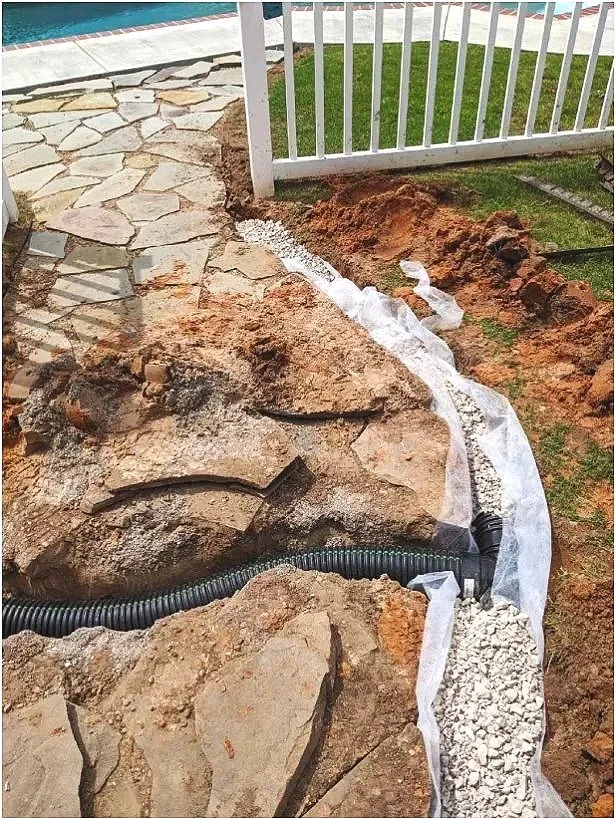
French drain along and under a walkway
French drains are designed to collect and redirect water that builds up below the surface. They are especially effective along foundations, fence lines, or areas where water consistently migrates underground.
Best used when:
Water collects near the foundation
Soil stays damp long after rain
Yard slopes gently but retains moisture
French drains are often critical in black clay areas, where water tends to linger and apply pressure to foundations.
Downspout Drains: Controlling Roof Runoff
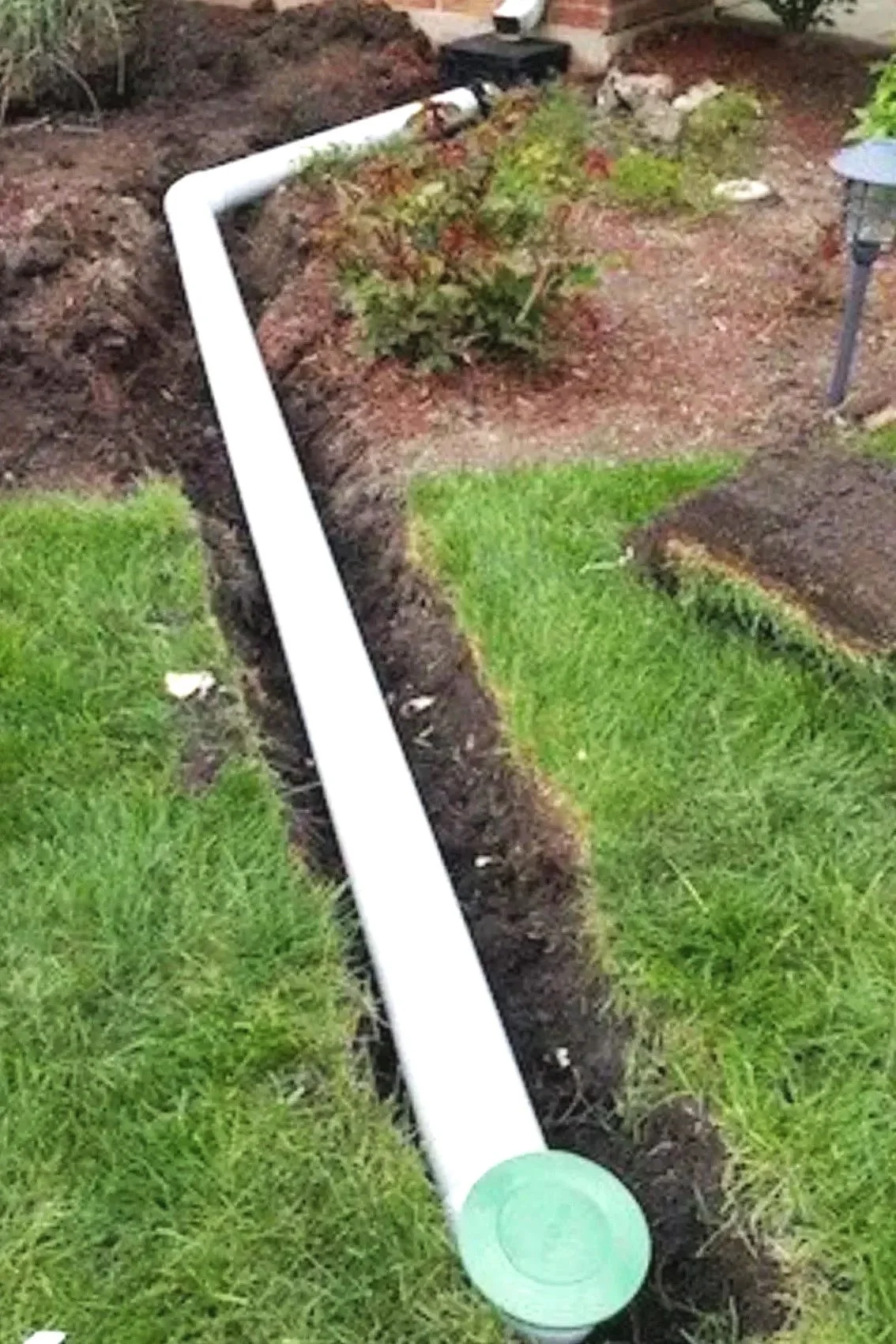
Downspout drain to a popup
Roof runoff is one of the largest contributors to yard drainage problems. Downspout drains capture water directly from gutters and move it safely away from the home.
Why they matter:
Prevent erosion near the foundation
Reduce soil saturation next to the home
Protect flower beds and hardscapes
In both sandy loam and clay soils, properly routed downspout drains prevent concentrated water from undermining the foundation.
Channel Drains and Basin Drains: Capturing Surface Water
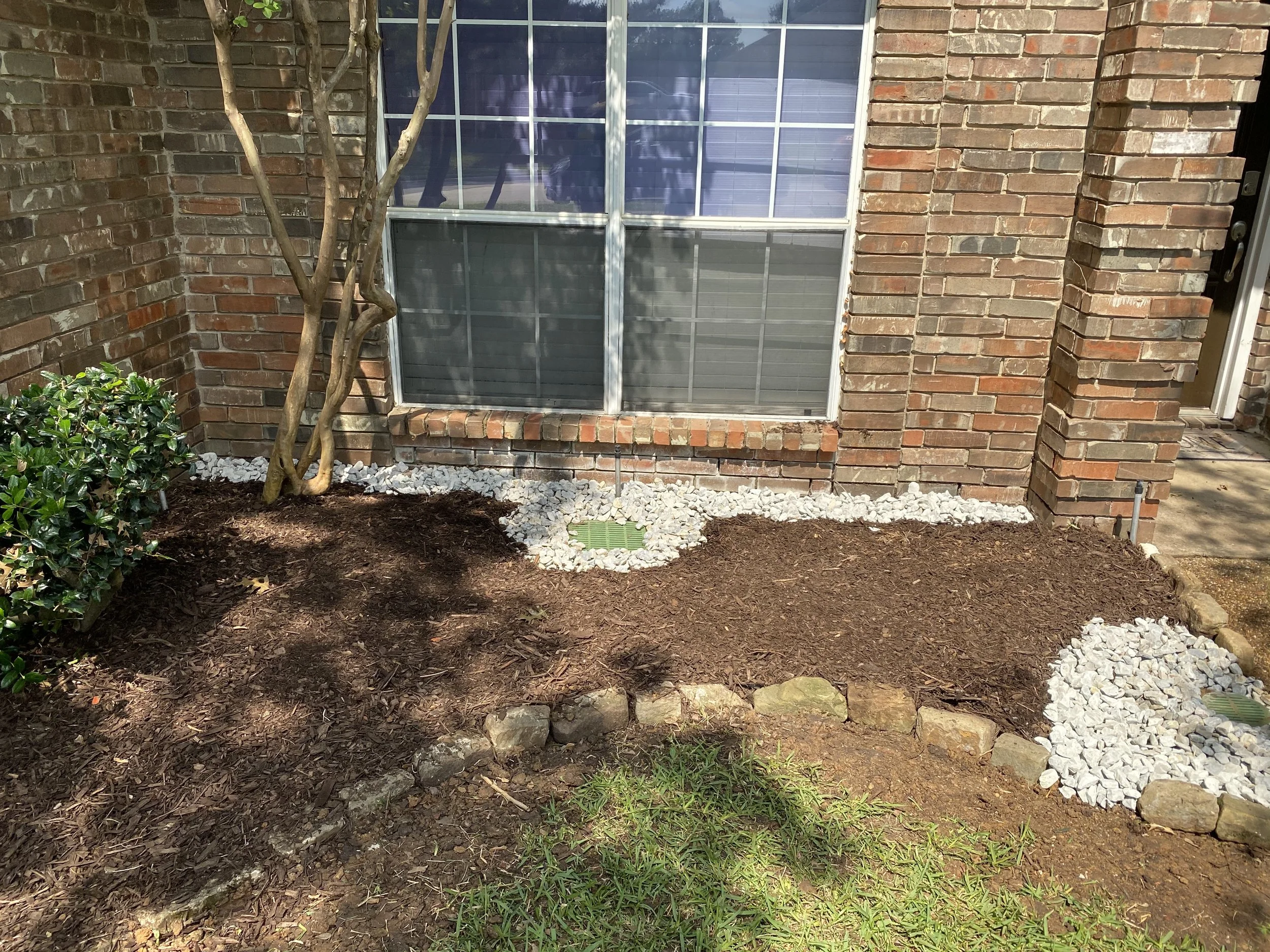
Basin drain to remove standing water
When water pools on patios, walkways, driveways, or low spots in the yard, surface drains are often the best solution.
Channel drains collect water along linear surfaces like patios and driveways
Basin drains capture water in low points where it naturally accumulates
These systems are especially valuable in clay-heavy areas, where surface water has nowhere to go.
Incorporating a Rainscape: Managing Water Naturally
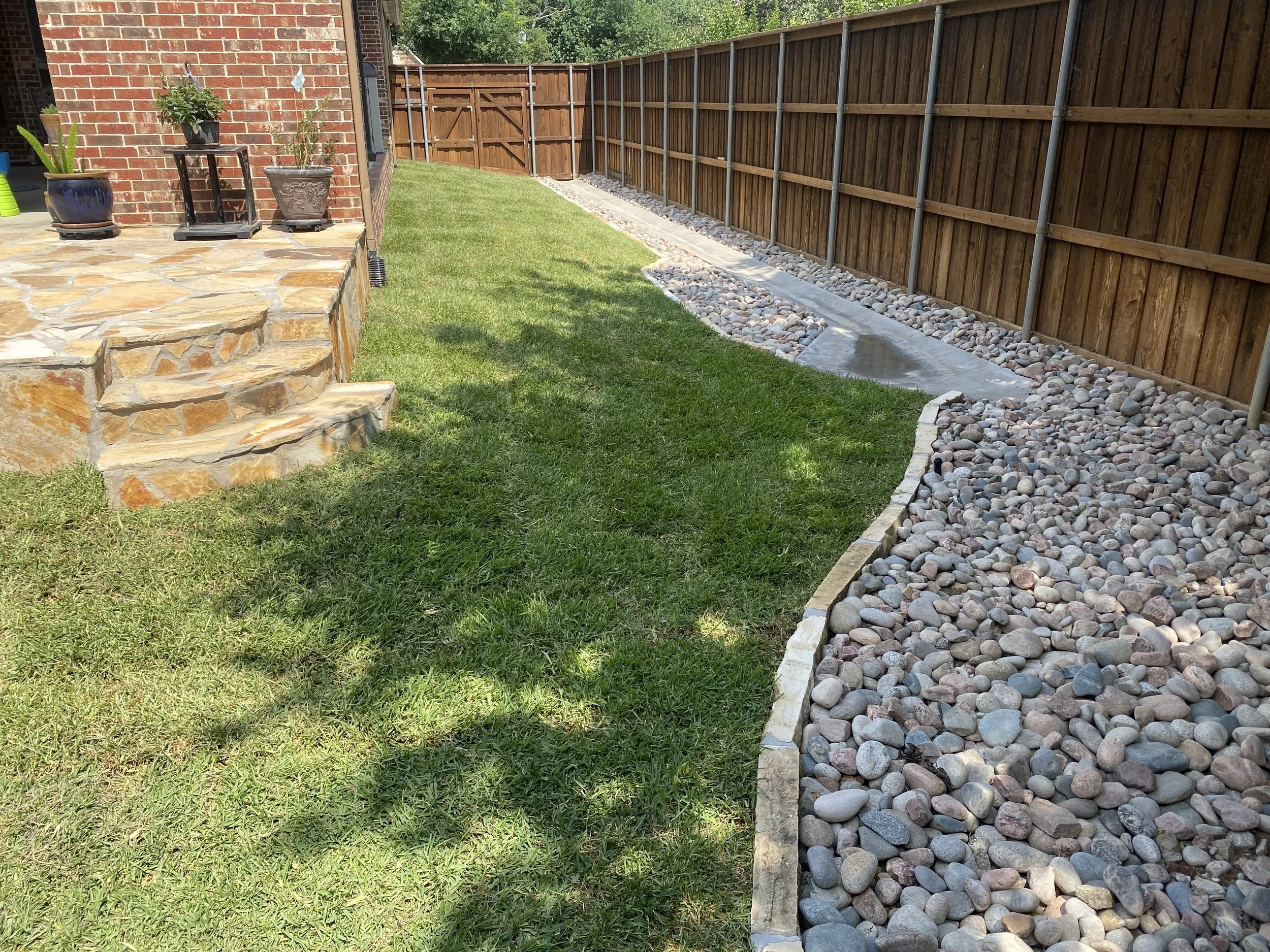
Dry creekbed leading to a concrete culvert
In addition to traditional drainage systems, many North Texas homeowners are choosing to incorporate rainscapes—landscape features designed to slow, spread, and absorb rainwater where appropriate.
A rainscape might include:
Shallow swales that guide water gently across the yard
Rain gardens planted with deep-rooted, water-tolerant plants
Permeable soil zones that allow controlled infiltration
Rock-lined channels or dry creek beds that manage flow while enhancing aesthetics
How Rainscapes Work with Drainage Systems
Rainscapes are most effective when paired with engineered drainage—not used as a replacement for it. For example:
Downspout drains can feed into a rain garden instead of discharging directly to the street
French drains can relieve subsurface pressure while surface swales manage visible flow
Basin drains can serve as overflow protection during heavy storms
In sandy loam areas, rainscapes can help slow water movement and reduce erosion. In black clay areas, they are carefully designed to manage surface flow while limiting prolonged soil saturation near the foundation.
The Benefits of a Comprehensive Drainage Approach
Protecting Your Foundation
Excess moisture is one of the leading contributors to foundation movement in North Texas. Directing water away from the home, and managing it thoughtfully across the landscape, reduces soil expansion, contraction, and pressure against foundation walls.
Preserving Landscaping and Hardscapes
Uncontrolled water erodes soil, kills turf, and undermines stonework. Drainage systems combined with rainscape elements keep landscapes intact, functional, and visually appealing.
Reducing Standing Water and Mud
Improved drainage transforms soggy, unusable areas into functional outdoor spaces, even after heavy rain.
Increasing Long-Term Property Value
A well-drained yard protects the home’s structure and improves curb appeal—both critical to long-term value.
Final Thoughts
In North Texas, drainage problems are rarely solved by a single solution. The most effective designs combine subsurface drainage, roof runoff control, surface collection, and, when appropriate, rainscape features that work with the natural landscape. You aren’t alone trying to solve your drainage challenges. Sunshine Home Hero understands what you are seeing and is a trusted partner to implement a holistic drainage solution.
Understanding whether your property sits on sandy loam or black clay is the first step toward choosing the right approach. With proper planning and professional installation, a comprehensive drainage and rainscape strategy offers lasting protection, healthier landscapes, and peace of mind every time it rains.